Archives: Articles/Briefs
Expanding understandings of well-being in higher education settings

Developing Shared Leadership Within Professional Learning Communities for Transformational Change Aimed at At-promise Student Success
Challenges to Expanding and Spreading the Work of Professional Learning Communities
How Professional Learning Communities Overcome the Knowing-Doing Gap
Leveraging Professional Learning Communities as a Mechanism to Spread New Ideas
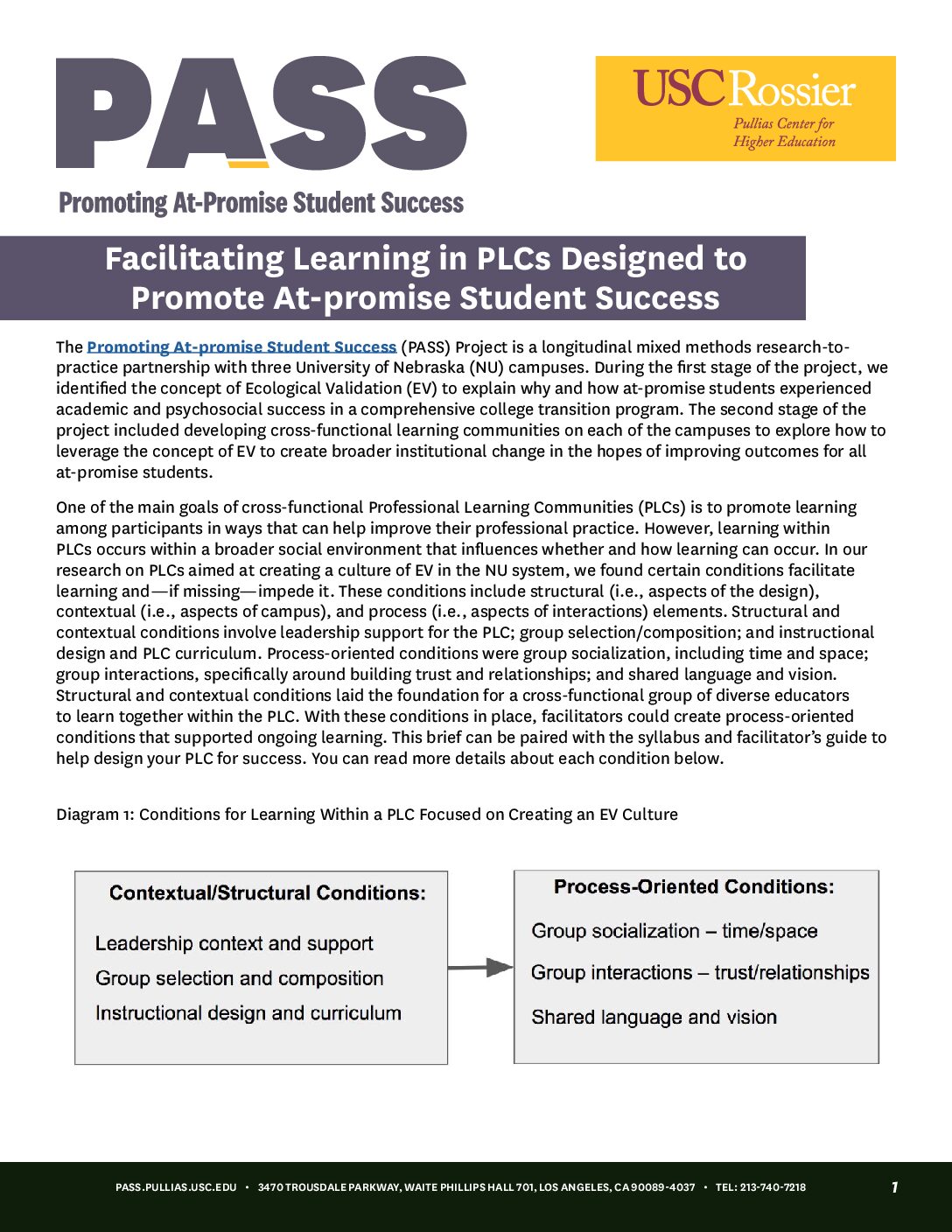
Facilitating Learning in PLCs Designed to Promote At-promise Student Success
Average Student Makes Mistake that Could Impact Career
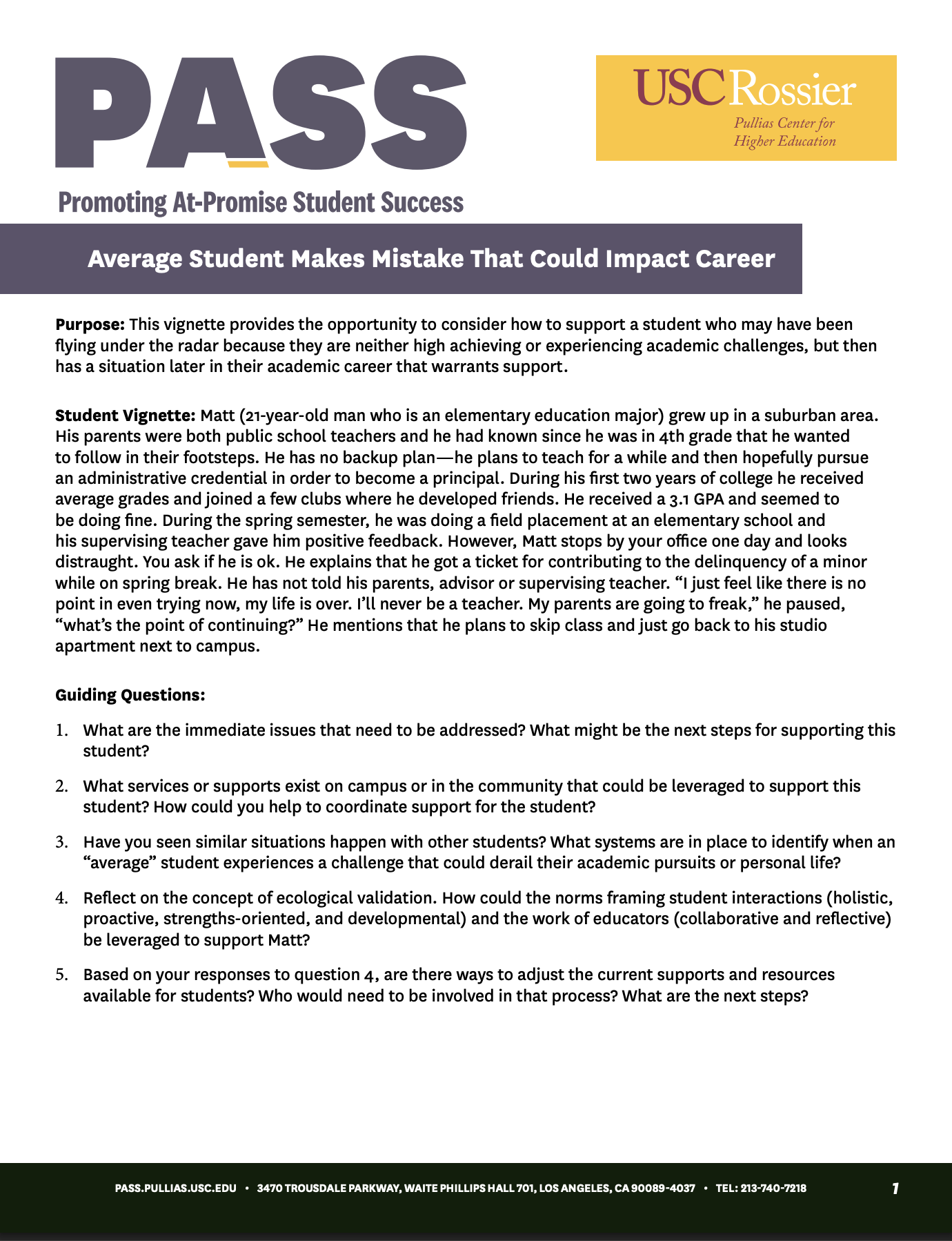
This vignette provides the opportunity to consider how to support a student who may have been flying under the radar because they are neither high achieving or experiencing academic challenges, but then has a situation later in their academic career that warrants support.
Student Feels Uncomfortable Accessing Counseling Services
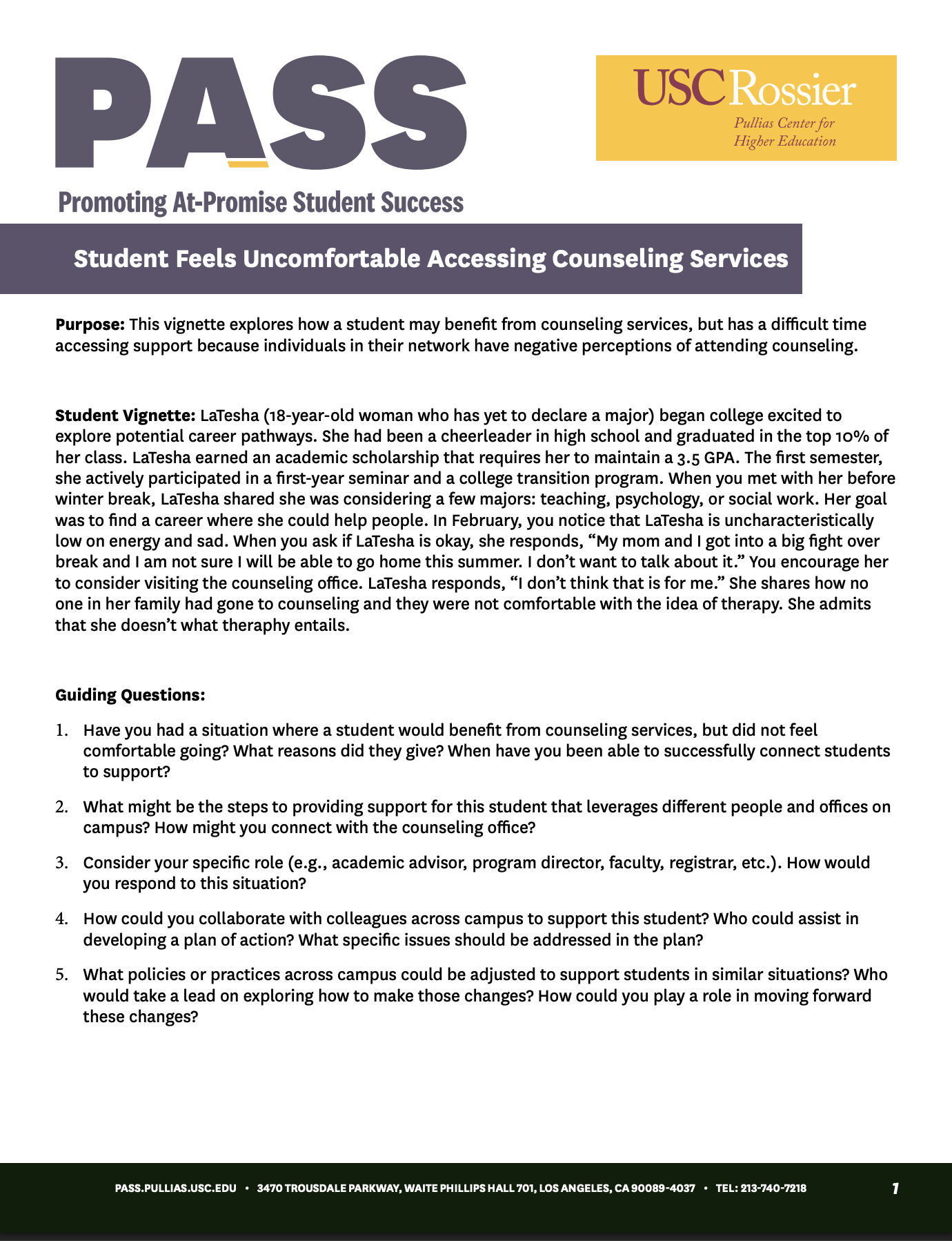
This vignette explores how a student may benefit from counseling services, but has a difficult time accessing support because individuals in their network have negative perceptions of attending counseling.
Working Student Taking Mostly Online Classes Requires Advice
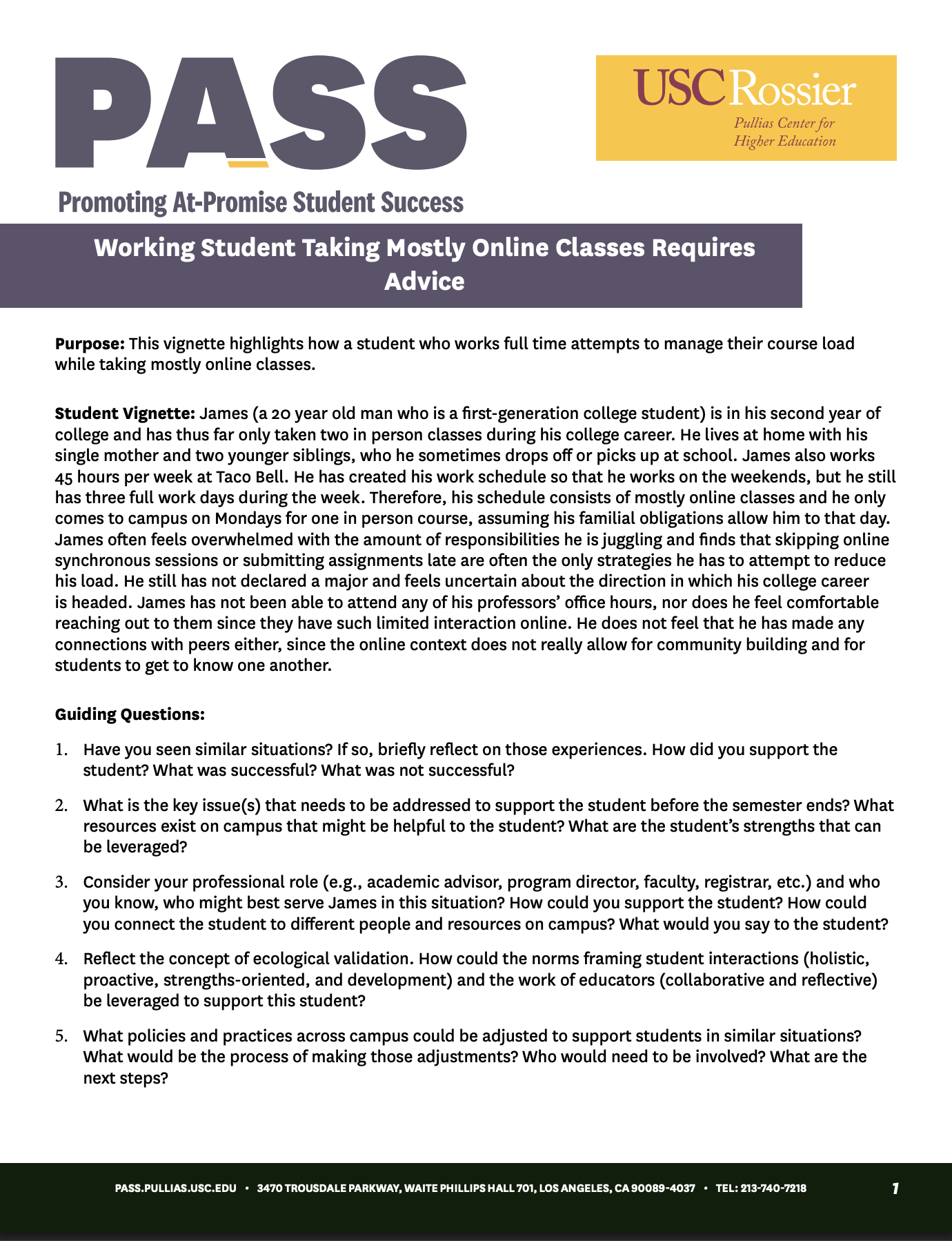
This vignette highlights how a student who works full time attempts to manage their course load while taking mostly online classes.