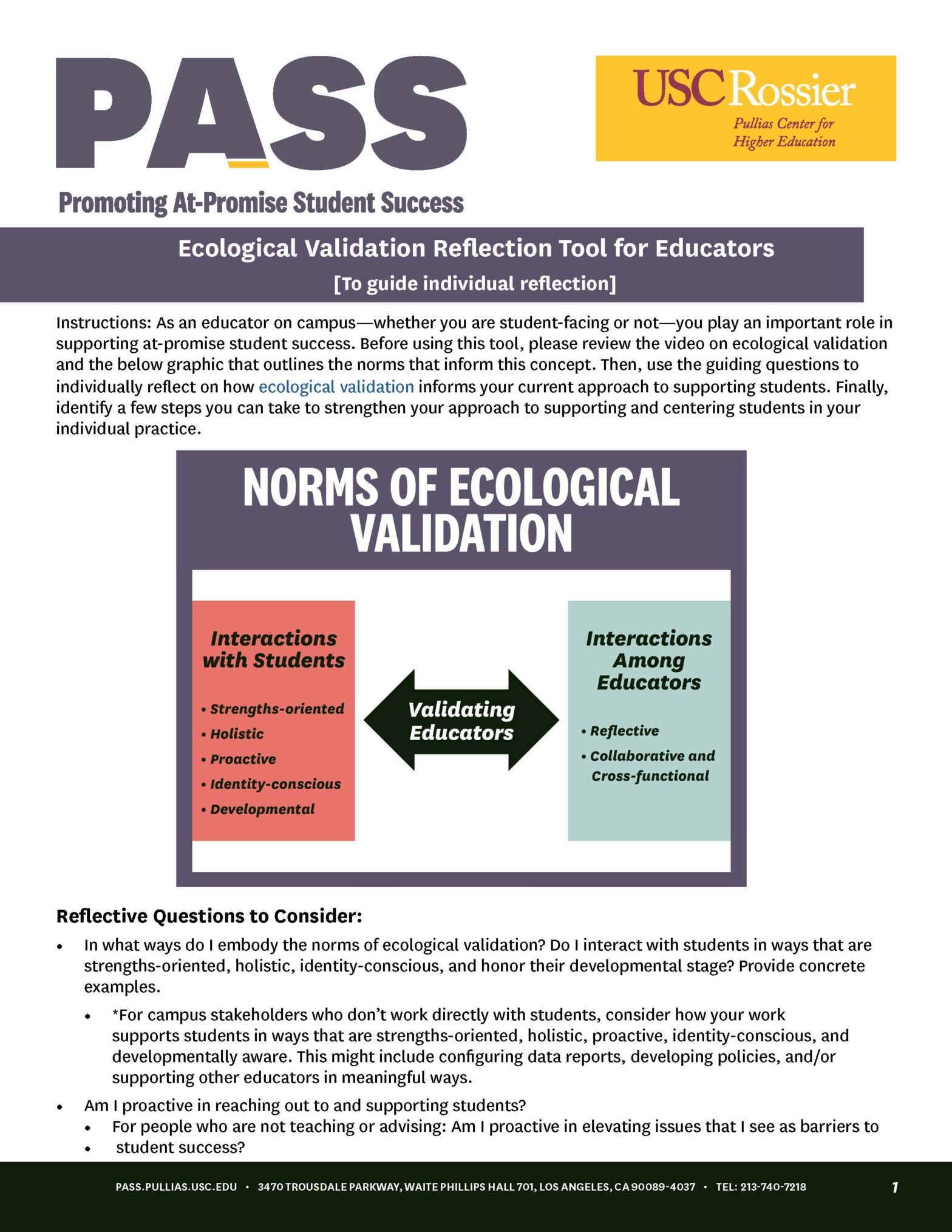
This tool uses guiding questions for individuals to reflect on how ecological validation informs your current approach to supporting students. It identifies a few steps you can take to strengthen your approach to supporting and centering students in your
individual practice.
Archives: Articles/Briefs
Ecological validation reflection tool – Unit level.
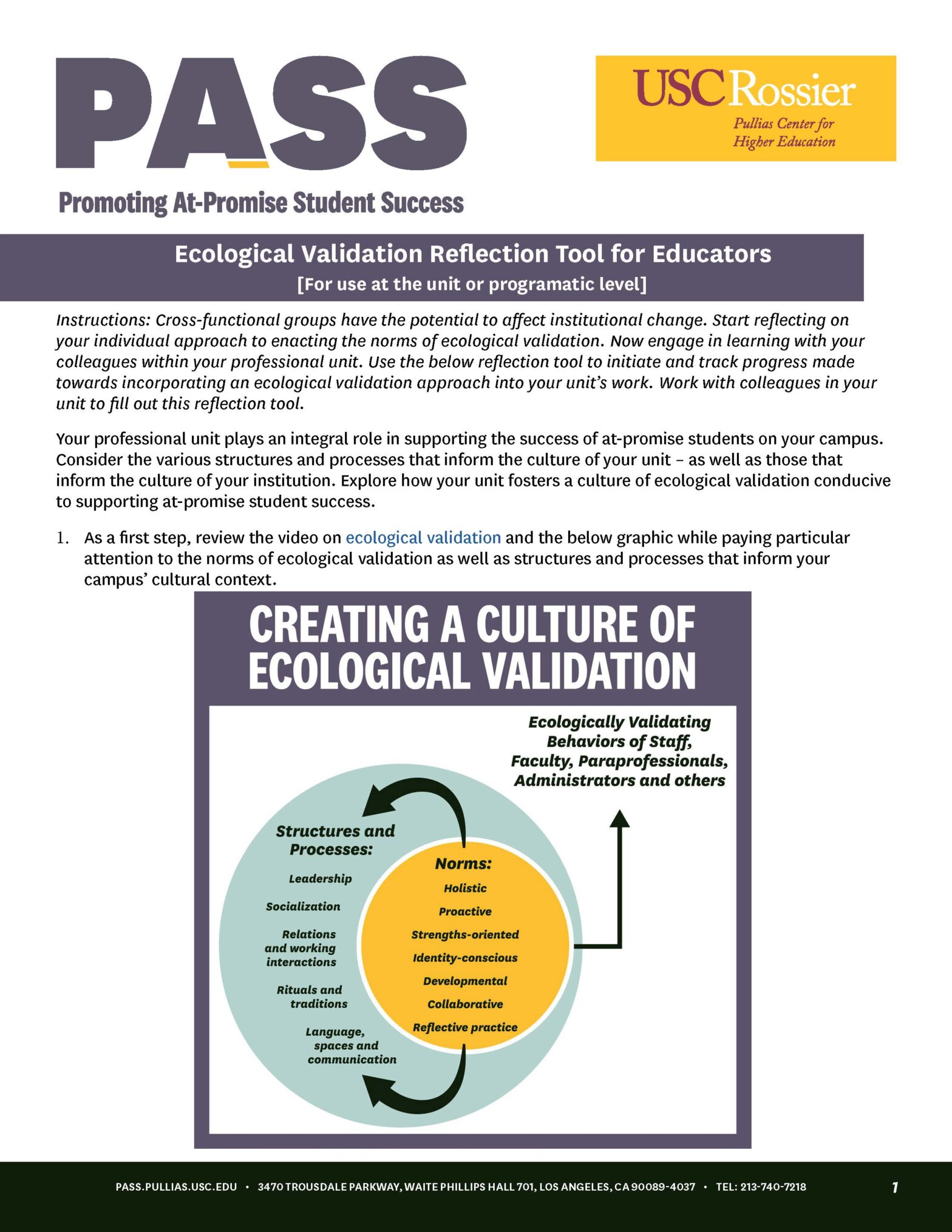
This tool provides a framework on your individual approach to enacting the norms of ecological validation. It guides engagement with your colleagues within your professional unit. It also initiates and track progress made towards incorporating an ecological validation approach into your unit’s work.
Guiding principles for comprehensive college support programs.
How instructors in higher education can support an ecology of validation for low-income, first-generation, and racially minoritized students.
Qualitative narrative of methods: Promoting at-promise student success (PASS) project.
Differences and similarities in time use and well-being among female and male undergraduates.
Professional learning communities and culture change in higher education: Facilitators to learning ecological validation to support historically marginalized students.
In this article, we explore how three campuses implemented professional learning communities (PLCs) in order to create institutional change in support of culture change (toward ecological validation) to support at-promise student success. The study explores the process of learning within the PLCs, examines facilitators of learning ecological validation, and discusses the viability of PLCs as a vehicle to undergo such learning in support of institutional culture change. The findings identify six conditions that support learning within PLCs in higher education settings aimed at culture change and these are distinctive from findings in the K-12 literature on PLCs.
Creating a campus-wide culture of student success: An evidence-based approach to supporting low-income, racially minoritized, and first-generation college students.
Reflection tool – Sustaining the work of the coordinating group.
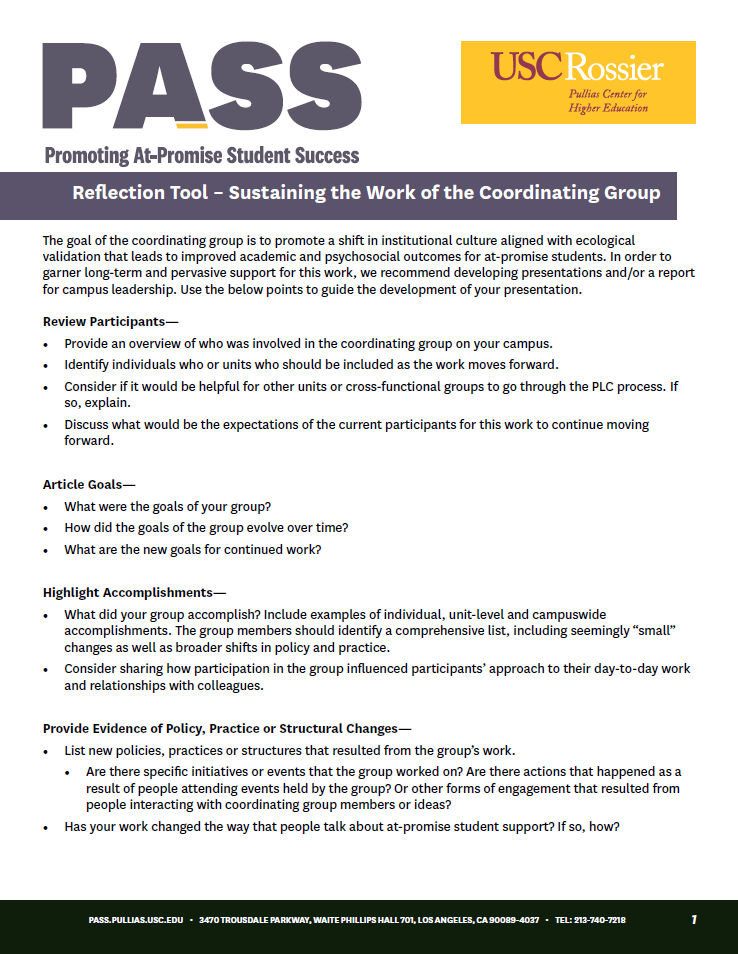
This tool provides a framework for evaluating the ongoing impact of ecological validation efforts on campus culture. It guides the development of reports and presentations to campus leadership, highlights accomplishments, shares challenges, and outlines next steps for sustaining work on at-promise student support through continued learning, resource alignment, and engagement with institutional leadership.
Assessing campus culture through an ecological validation lens.
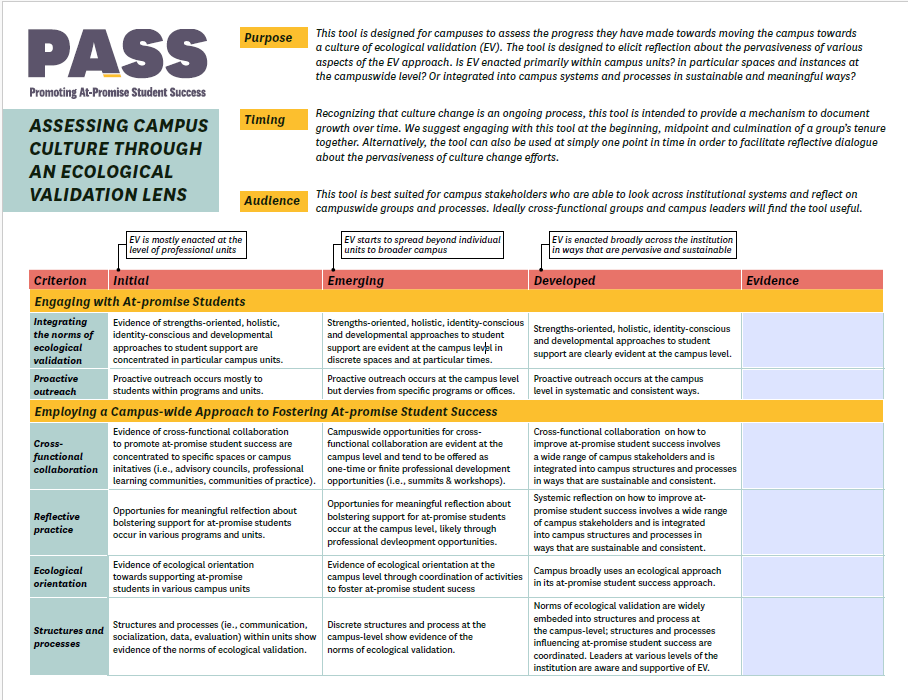
This tool provides a framework for assessing the integration of ecological validation (EV) into campus cultures to support at-promise students. It offers tools and metrics for evaluating progress in areas such as outreach, cross-functional collaboration, leadership engagement, data use, and reflective practices, emphasizing the importance of sustainable, systemic change at institutional levels.