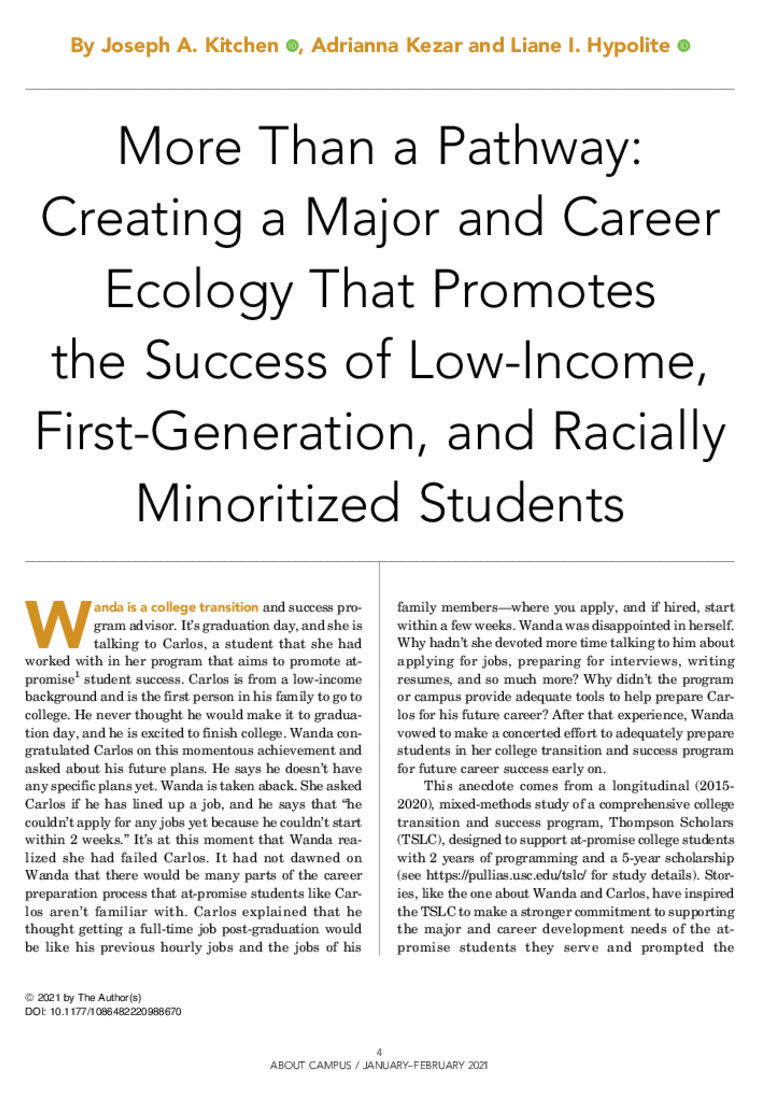
The article presents the “major and career ecology” model to illustrate how academic programs, career services, and institutional supports can be intentionally integrated to promote student success. It underscores the importance of proactive, coordinated structures that support low-income, first-generation, and racially minoritized students.
Archives: Articles/Briefs
Career self-efficacy: A mixed-methods study of an under-explored research area for first-generation, low-income, and under-represented college students in a comprehensive college transition program.
[et_pb_section fb_built=”1″ admin_label=”section” _builder_version=”4.16″ global_colors_info=”{}”][et_pb_row admin_label=”row” _builder_version=”4.16″ background_size=”initial” background_position=”top_left” background_repeat=”repeat” global_colors_info=”{}”][et_pb_column type=”4_4″ _builder_version=”4.16″ custom_padding=”|||” global_colors_info=”{}” custom_padding__hover=”|||”][et_pb_text admin_label=”Text” _builder_version=”4.16″ background_size=”initial” background_position=”top_left”… Continue reading Career self-efficacy: A mixed-methods study of an under-explored research area for first-generation, low-income, and under-represented college students in a comprehensive college transition program.